Why an AC Is Running But Not Cooling
If your air conditioner is running but not cooling, you are dealing with one of the most common HVAC complaints homeowners face during peak summer heat. The system may sound normal, the fan may be blowing, and the thermostat may even show that it is on, yet the indoor temperature keeps climbing. In hot, humid climates, this issue becomes especially frustrating because a system that only moves air instead of removing heat and humidity can make the house feel sticky, stale, and uncomfortable fast.
In many neighborhoods, this problem gets worse on the hottest afternoons when the unit is under maximum load. Whether you are in a coastal area with salty air, a desert city with extreme heat, or a suburban community where older ductwork runs through a scorching attic, the reasons behind AC running not cooling usually trace back to airflow restrictions, refrigerant issues, dirty components, electrical faults, or thermostat problems.
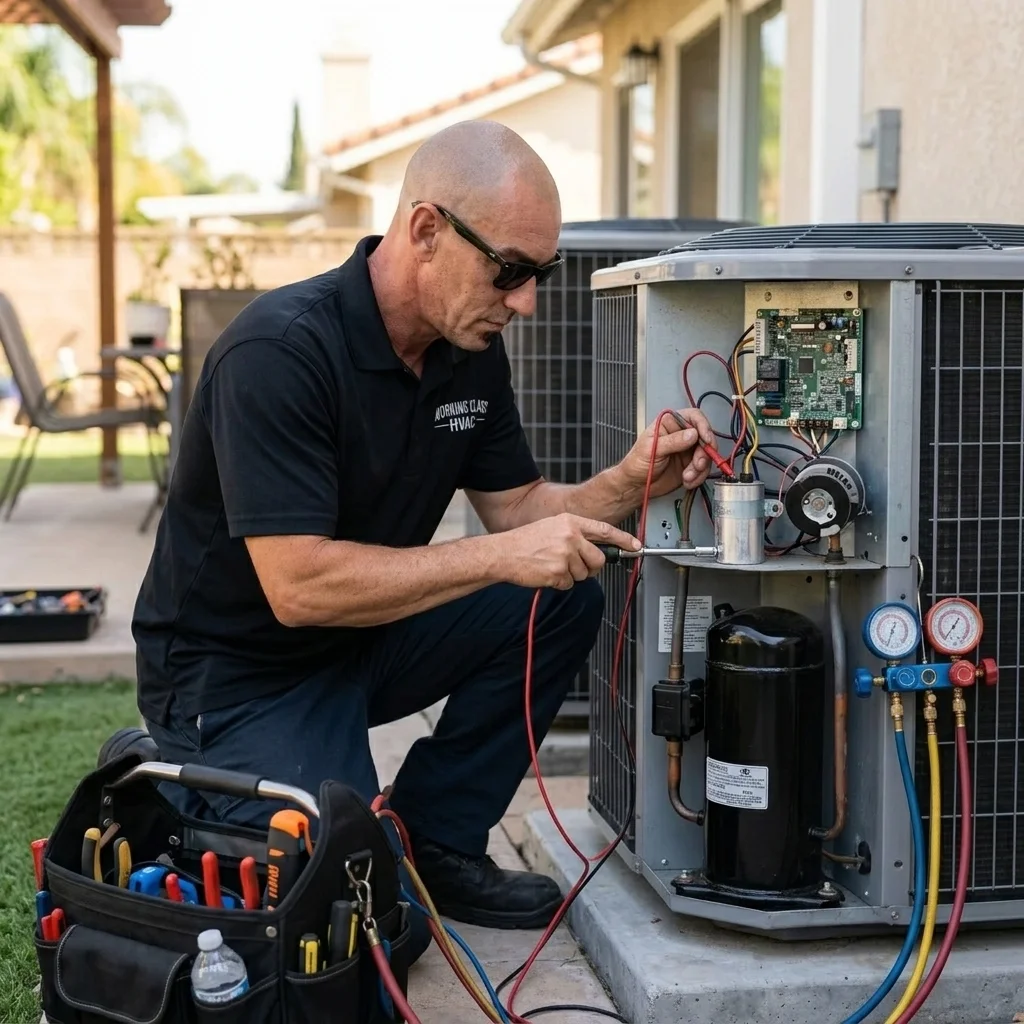
The Most Common Reasons Your AC Runs Without Cooling
There is no single cause for this issue. The key is understanding whether the problem is tied to airflow, heat exchange, or the system’s ability to start and sustain the cooling cycle. Here are the most frequent culprits.
1. Dirty Air Filter
A clogged air filter is one of the simplest and most overlooked causes. When airflow is restricted, the evaporator coil cannot absorb enough heat from the indoor air. The system keeps running, but the cooling effect drops sharply. In homes near busy roads, dusty new construction zones, or areas with seasonal pollen, filters can load up faster than expected.
2. Low Refrigerant
Refrigerant is what allows your AC to move heat out of your home. If the charge is low due to a leak, the unit may run continuously while producing weak cooling. This is not a normal maintenance issue; refrigerant should not disappear unless there is a leak or a service problem. Signs may include ice on the refrigerant line, hissing noises, or warm air from vents.
3. Dirty Evaporator or Condenser Coils
Coils transfer heat. If the indoor evaporator coil is coated with dust or the outdoor condenser coil is packed with debris, the system cannot complete the heat exchange process efficiently. In humid regions, evaporator coils can also accumulate grime faster due to condensation. In coastal communities, the outdoor unit may suffer from salt air corrosion, which can reduce performance over time.
4. Outdoor Unit Problems
If the outdoor condenser fan is not spinning properly or the compressor is failing, the system may appear to run normally while failing to release heat outside. This is especially common when landscaping debris, leaves, or storm residue blocks airflow around the outdoor unit. In neighborhoods with tight side yards or patio enclosures, poor clearance can also trap heat around the condenser.
5. Thermostat Issues
Sometimes the problem is not the AC itself but the signal it receives. A malfunctioning thermostat, bad placement near a sunny window, or incorrect settings can cause the system to cycle improperly. If the thermostat is located in a hallway with weak airflow or near a kitchen that heats up quickly, it may not reflect the true temperature of the home.
How to Diagnose the Problem Step by Step
Before calling for service, you can perform a few careful checks to narrow down the issue. These are safe, basic inspections that help determine whether the problem is simple or more serious.
- Check the thermostat — Make sure it is set to cool, the temperature is below the current room temperature, and the fan setting is on auto rather than on.
- Inspect the air filter — If it looks gray, dusty, or visibly clogged, replace it.
- Look at the outdoor unit — Confirm that the fan is spinning and that the unit is free from weeds, trash, or leaves.
- Feel the vents — Air should be cool, not just moving. Weak airflow can point to duct issues or a frozen coil.
- Check for ice — Ice on the indoor coil or refrigerant line can indicate restricted airflow or low refrigerant.
If the system is still running but the home is not cooling, the issue likely requires a professional diagnosis. Modern HVAC systems are designed to protect themselves, so symptoms like short cycling, frozen coils, or warm air can signal deeper mechanical trouble.
Why This Problem Is So Common in Hot Local Climates
In places where summer heat is intense, AC systems operate for long stretches without a break. That constant runtime exposes every weakness in the system. Homes in inland valleys often battle dry heat and attic temperatures that soar well above outdoor temperatures. Coastal homes may struggle with humidity, salt air, and corrosion. Older neighborhoods with aging insulation or undersized ductwork can also make a working air conditioner seem ineffective.
For example, a home near a major freeway corridor may pull in extra dust and debris, accelerating filter buildup. A property close to the shoreline may see outdoor coils degrade faster because of salty moisture. A house with west-facing windows and a dark roof can absorb so much afternoon heat that even a healthy AC has to work harder to keep up. These local conditions matter because they change how the system behaves and how often maintenance should be performed.
“An AC that runs constantly without cooling is often telling you that heat is not being removed efficiently — either because air cannot move, refrigerant cannot circulate, or the outdoor unit cannot reject heat.”
What You Can Safely Check Before Calling a Technician
Some problems are easy to spot, but others can be dangerous to handle without training. Here are practical checks homeowners can do safely.
Replace the Filter
This is the fastest first step. A fresh filter can immediately improve airflow if the old one is blocked.
Clear the Outdoor Unit
Keep at least a few feet of open space around the condenser. Trim plants, remove debris, and avoid stacking items near the unit.
Verify Vent Openings
Make sure supply vents are open and not blocked by furniture, rugs, or curtains. Closed or obstructed vents can create uneven cooling and pressure issues.
Reset the System
Sometimes a controlled power reset can clear a minor control issue. Turn the thermostat off, shut the system off at the breaker for a few minutes, then restart it. If the same symptoms return, there is likely a real mechanical fault.
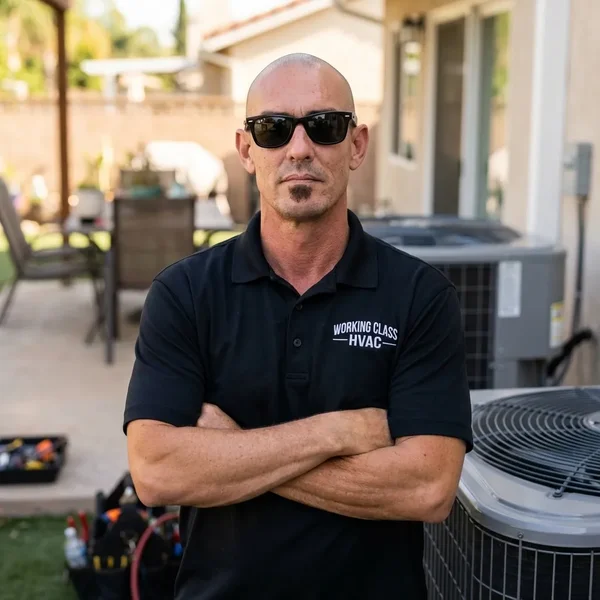
When the Problem Points to a Bigger Repair
Some signs suggest the fix is beyond routine maintenance. If you notice these symptoms, schedule service promptly:
- Warm air coming from vents even when the system is set to cool
- Ice buildup on refrigerant lines or indoor coils
- Outdoor unit humming but not fully starting
- Frequent breaker trips
- Unusual rattling, buzzing, or clicking sounds
- Musty odors that may indicate moisture or mold in the system
These symptoms often indicate a failing capacitor, compressor trouble, refrigerant leaks, blocked airflow, or electrical control problems. The sooner the issue is addressed, the lower the risk of major component damage.
How Ductwork and Insulation Affect Cooling Performance
Even a perfectly functioning AC can struggle if the home’s duct system is leaking air or the insulation is inadequate. In many older houses, ducts run through attics that become extremely hot during the day. If those ducts have leaks, cool air escapes before it reaches the rooms. This creates a situation where the system runs longer and longer, but the indoor temperature barely changes.
Insulation plays a major role too. Homes with poor attic insulation, leaky windows, or sun-drenched rooms often feel warmer than the thermostat suggests. In those cases, the AC may be working hard, but the building envelope is allowing heat to overwhelm the cooling system. That is why proper insulation, duct sealing, and ventilation are just as important as the unit itself.
Preventive Maintenance That Helps Avoid This Issue
The best way to reduce the chance of your AC running without cooling is regular maintenance. A professional tune-up can catch small issues before they become expensive breakdowns.
Recommended Maintenance Tasks
- Replace air filters regularly
- Clean indoor and outdoor coils
- Check refrigerant levels and inspect for leaks
- Test electrical components and capacitors
- Inspect condensate drain lines
- Verify thermostat accuracy
- Assess airflow and duct performance
In humid cities, condensate drain maintenance is especially important because a blocked drain can lead to moisture buildup and system shutdown. In dusty areas, coil cleaning and filter changes matter more frequently. In coastal environments, corrosion inspections should be part of every maintenance visit.
Why Professional Diagnosis Matters
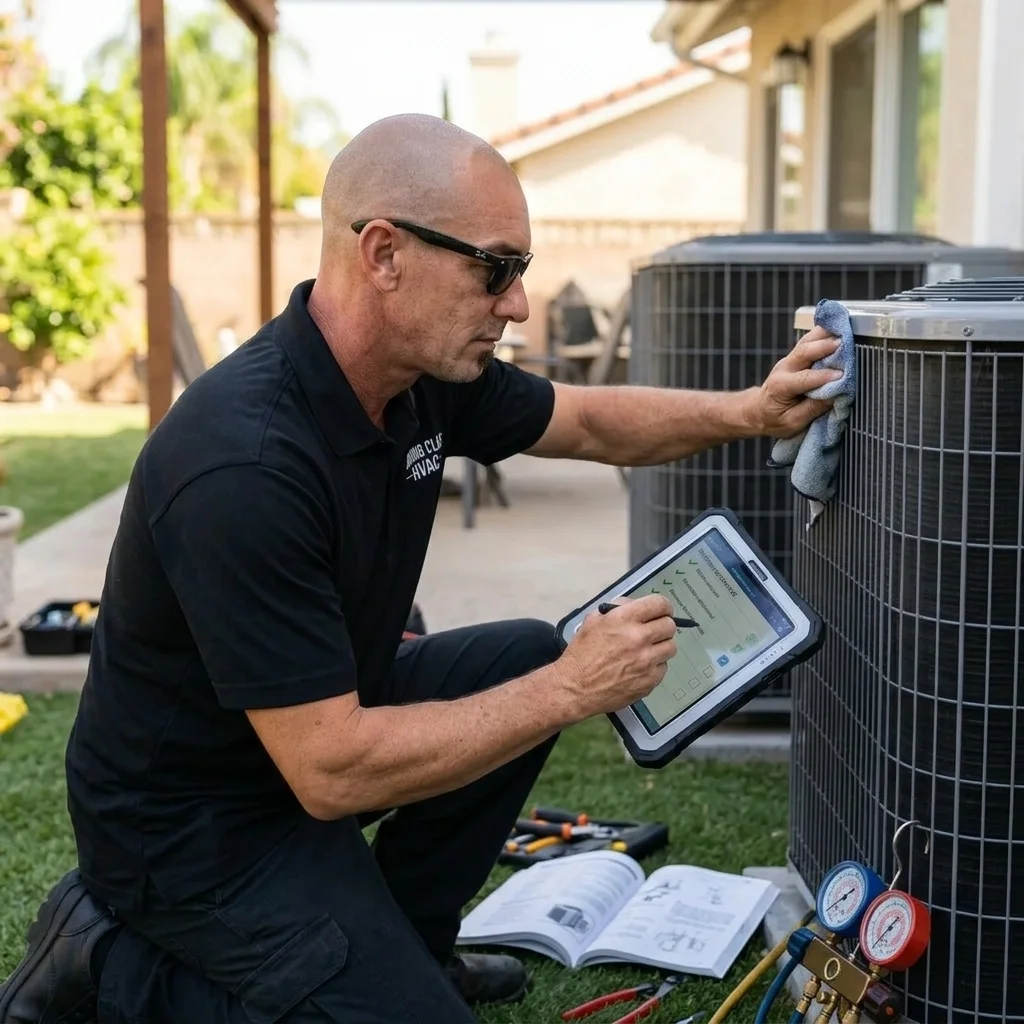
Because several different failures can create the same symptom, guessing can waste time and money. A trained HVAC technician can measure refrigerant pressure, test electrical components, inspect airflow, and identify whether the issue is caused by a leak, a failing part, or a system-wide efficiency problem. That matters because the wrong repair can leave the root problem unresolved.
For example, adding refrigerant without fixing a leak is only a temporary patch. Replacing a thermostat when the compressor is failing will not restore cooling. A proper diagnosis ensures the repair is targeted and effective.
Frequently Asked Questions
Why is my AC running but the air is not cold?
The most common reasons are a dirty filter, low refrigerant, frozen coils, dirty condenser coils, or an outdoor unit problem. Thermostat issues can also play a role.
Can I keep running the AC if it is not cooling?
You can, but it is not recommended for long. Continuous operation with poor cooling can damage the compressor, increase energy bills, and worsen existing problems.
How do I know if my AC is low on refrigerant?
Common signs include weak cooling, ice on the lines, hissing sounds, and longer runtime. A technician must confirm the issue and repair any leak.
Will changing the filter fix the problem?
Sometimes, yes. If restricted airflow is the cause, a new filter may help quickly. If not, the issue likely lies deeper in the system.
Why does my AC work better at night than during the day?
Outdoor temperatures are lower at night, so the system has an easier time rejecting heat. If cooling drops sharply during the afternoon, the unit may be undersized, dirty, or struggling with heat gain from the home.
When should I call for AC repair?
If the system is running but not cooling after you have checked the filter, thermostat, vents, and outdoor unit, it is time for professional service. Any signs of ice, burning smells, or breaker trips should be handled immediately.
Final Takeaway
An AC running but not cooling is not just an inconvenience; it is a warning sign that something in the cooling process has broken down. Whether the issue is airflow, refrigerant, electrical components, coil contamination, or home efficiency, the solution starts with identifying the true cause. In hot local climates where systems work harder than ever, fast troubleshooting and routine maintenance can prevent larger repairs and restore comfort before the heat becomes unbearable.
If your air conditioner is on but your home still feels warm, the smartest move is to act early. The sooner the problem is diagnosed, the easier it is to protect your comfort, energy costs, and HVAC equipment.