Improving Indoor Air Quality: A Practical, High-Impact Guide for Healthier Spaces
Indoor air quality affects comfort, productivity, allergy symptoms, sleep quality, and long-term well-being. If your home or workplace feels stale, dusty, humid, or irritating to the lungs, the problem is often more than “just air.” It may be a combination of airborne particles, excess humidity, chemical pollutants, poor ventilation, and hidden moisture issues that quietly build up over time. Improving indoor air quality is not a one-step fix; it is a layered strategy that starts with understanding where pollutants come from and how they move through a building.
For property owners in places like Phoenix, Arizona, the challenge may be dry desert dust, HVAC strain, and intense cooling cycles that keep windows closed for months. In coastal cities such as Charleston, South Carolina, salt air, humidity, and mold pressure can become the dominant concern. In older Midwestern neighborhoods near Chicago’s Lakeview or Milwaukee’s Third Ward, aging ductwork, basement dampness, and winter sealing can trap contaminants indoors. No matter the region, the goal is the same: create cleaner, more breathable indoor environments without overcomplicating the process.
What Indoor Air Quality Actually Means
Indoor air quality, often shortened to IAQ, refers to the condition of the air inside buildings as it relates to occupant health and comfort. Good IAQ means lower exposure to pollutants, balanced humidity, fresh airflow, and fewer irritants circulating through living and working areas. Poor IAQ can show up as headaches, dry eyes, coughing, fatigue, sinus irritation, musty odors, or worsening asthma and allergy symptoms.
Many people assume indoor air is naturally cleaner than outdoor air, but that is not always true. In tightly sealed homes and offices, pollutants can become concentrated. Cooking fumes, cleaning chemicals, pet dander, dust mites, off-gassing from furniture, smoke, and mold spores may linger far longer than expected. In areas with heavy traffic corridors like Los Angeles’ I-405, Atlanta’s I-285, or Dallas’ LBJ Freeway, outdoor pollution can also infiltrate through gaps, doors, and ventilation systems, making source control even more important.
Common Sources of Indoor Air Pollution
To improve indoor air quality effectively, you need to identify the biggest pollutant sources. These often fall into a few broad categories:
1. Particulate matter
Dust, pollen, soot, pet hair, and fine particles can circulate through HVAC systems and settle on surfaces. In arid climates like Las Vegas or Albuquerque, fine dust can enter through doors, windows, and tiny building gaps. In spring-heavy pollen regions such as Raleigh or Nashville, outdoor allergens can easily hitch a ride inside.
2. Biological contaminants
Mold spores, bacteria, dust mites, and pet dander thrive where moisture, poor cleaning, or inadequate filtration exist. Basements, bathrooms, crawl spaces, and laundry rooms are especially vulnerable. In humid places like Houston, Tampa, or New Orleans, excess moisture can accelerate microbial growth and create persistent odors.
3. Chemical pollutants
Volatile organic compounds, or VOCs, come from paints, adhesives, flooring, air fresheners, cabinetry, and cleaning products. New remodels can temporarily increase chemical exposure. In urban apartments near downtown cores, traffic-related pollutants and indoor chemicals can combine, making ventilation especially important.
4. Combustion byproducts
Gas stoves, fireplaces, candles, and attached garages can introduce carbon monoxide, nitrogen dioxide, and fine particles. Homes in cold-weather cities like Minneapolis or Buffalo often seal up tightly during winter, which can trap these pollutants indoors if exhaust systems are weak or improperly maintained.
The Most Effective Ways to Improve Indoor Air Quality
There is no single best solution for every building. The strongest approach combines prevention, filtration, ventilation, humidity control, and routine maintenance. The following strategies offer the biggest return on effort.
| Strategy | What It Helps With | Why It Matters |
|---|---|---|
| High-efficiency filtration | Dust, pollen, pet dander, smoke particles | Captures pollutants before they recirculate |
| Better ventilation | Stale air, VOCs, odors, excess CO2 | Introduces cleaner outdoor air and dilutes contaminants |
| Humidity control | Mold, dust mites, discomfort | Keeps moisture in a healthier range |
| Source reduction | Chemicals, smoke, allergens | Prevents pollutants from entering the air in the first place |
Upgrade filtration at the source
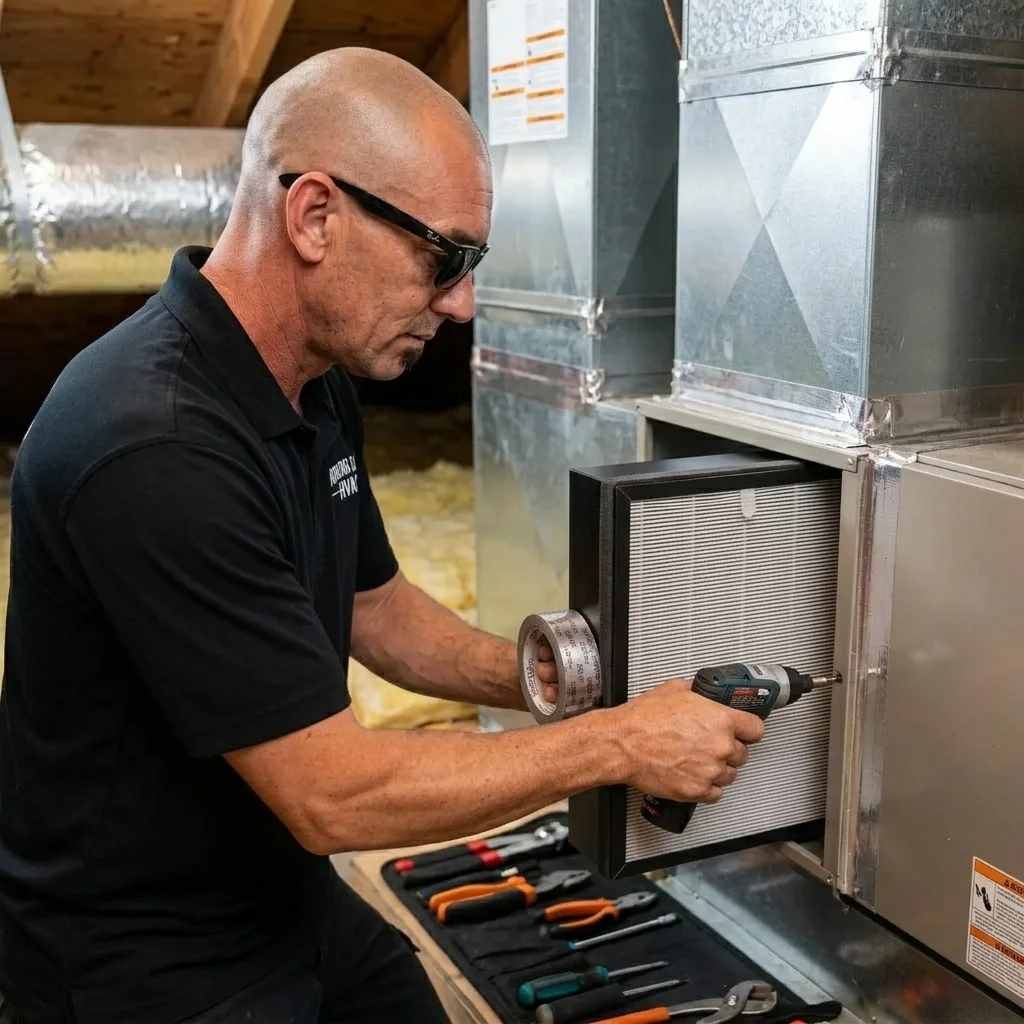
Your HVAC filter is one of the simplest and most powerful tools for cleaner indoor air. A quality filter can capture a meaningful amount of airborne debris, but only if it fits properly and is changed on schedule. Many systems perform best with filters designed to balance airflow and particle capture. If a filter is clogged, the system may struggle, reducing both comfort and air cleanliness.
For homes near dusty construction corridors in fast-growing suburbs like Frisco, Texas, or Chandler, Arizona, filter changes may need to happen more often than the typical schedule. In historic homes with older duct systems, it is wise to check for leaks, gaps, and return-air issues that allow dust to bypass the filter entirely.
Ventilate with purpose
Ventilation is the process of replacing stale indoor air with fresh outdoor air. That does not mean leaving windows open all day in every season; rather, it means using exhaust fans, mechanical ventilation, and balanced airflow to reduce pollutant buildup. Kitchen range hoods, bathroom exhaust fans, and whole-home ventilation systems all play a role.
In neighborhoods with heavy humidity, such as Miami’s Coconut Grove or Baltimore’s waterfront areas, ventilation must be paired with moisture management to avoid pulling damp air into the wrong places. In dry mountain cities like Denver or Salt Lake City, ventilation may need to be balanced with indoor humidity support so the air does not become uncomfortably arid.
Control humidity aggressively
Humidity is one of the most overlooked parts of indoor air quality. Too much moisture can support mold growth and dust mites. Too little can dry out nasal passages and make airborne particles more irritating. Many experts aim for a relative humidity range around 30% to 50%, though comfort may vary by season and building type.
If you live in a Gulf Coast climate, a dehumidifier may be essential for keeping a basement or first floor from becoming musty. In a cold northern city where winter air is dry, a humidifier may make sense in bedrooms or main living areas. The key is to monitor conditions instead of guessing.
Reduce pollutants at the source
Source control often delivers the biggest improvement with the least effort. Choose low-VOC paints and finishes, avoid unnecessary fragrance-heavy products, and store chemicals tightly sealed in ventilated areas. Use lids while cooking, run the vent hood, and clean spills quickly. If you smoke, keep it outdoors and away from entry points. If you have pets, consistent grooming and vacuuming can drastically reduce dander buildup.
“The cleanest air is not just filtered air — it is air that has fewer pollutants introduced into it from the start.”
Room-by-Room Air Quality Priorities
Different spaces have different air quality risks, so a one-size-fits-all approach rarely works. A smart plan targets the rooms where pollutants concentrate most.
- Kitchen: Focus on exhaust, grease control, and combustion reduction. Use the hood every time you cook, especially with gas appliances.
- Bathroom: Prevent moisture buildup with strong ventilation and quick drying of wet surfaces.
- Bedroom: Prioritize quiet filtration, low dust accumulation, and stable humidity for better sleep.
- Basement: Watch for leaks, musty odors, and foundation moisture, especially in older homes in cities like Cleveland, Pittsburgh, or St. Louis.
- Living room: Reduce dust sources, vacuum upholstery, and limit candles, incense, and aerosol sprays.
Signs Your Indoor Air Needs Attention
Sometimes the warning signs are obvious. Other times, the clues are subtle and easy to ignore. Common indicators of poor indoor air quality include:
- Persistent odors that do not go away after cleaning
- Visible dust settling quickly after dusting
- Condensation on windows or around vents
- Recurring allergy or asthma symptoms indoors
- Musty or damp smells near closets, basements, or bathrooms
- Headaches or fatigue that improve when you leave the building
In older brick buildings in Philadelphia, Boston, or Providence, indoor air quality issues may be linked to aging insulation, aging boilers, or hidden moisture pathways. In newer suburban homes, the issue may be over-sealing paired with weak ventilation. The symptoms can be similar even when the causes differ.
How Local Climate Affects Indoor Air Quality
Geography matters more than many people realize. Climate shapes the pollutants you face, the HVAC demands on your property, and the maintenance schedule needed to keep air clean.
Hot, dry climates
In desert regions, dust infiltration and low humidity are major concerns. Homes in Phoenix, Tucson, and Inland Empire communities often need stronger filtration and better sealing around doors, windows, and attic access points.
Hot, humid climates
In places like Orlando, Mobile, and coastal South Carolina, moisture control becomes the priority. Dehumidification, drainage management, and mold prevention are central to cleaner air.
Cold climates
In northern cities, tightly closed homes can trap indoor pollutants for months. Combustion safety, ventilation, and winter humidity balance are critical in places like Detroit, Green Bay, and upstate New York.
Urban and high-traffic areas
Buildings near major highways such as I-95, I-10, I-5, or the Kennedy Expressway may experience higher levels of soot and traffic pollution. In these environments, air sealing plus filtration can make a noticeable difference.
Best Practices for Long-Term Maintenance
Improving indoor air quality is not a one-time project. It works best when built into a regular maintenance routine. Replace filters on schedule, clean vents and registers, inspect for leaks, and service HVAC equipment before peak heating or cooling seasons. If your building has recurring moisture issues, address the cause rather than just the symptom.
It is also wise to think seasonally. Spring may bring pollen surges. Summer can increase humidity and mold risk. Fall often means leaf debris, dust, and system changeovers. Winter can trap indoor pollutants while drying out the air. A building that stays healthy year-round is usually one that adapts to these shifts.
Frequently Asked Questions
What is the fastest way to improve indoor air quality?
Start with filtration, ventilation, and source reduction. Replace or upgrade HVAC filters, run exhaust fans, reduce chemical sprays, and remove obvious moisture problems.
Do air purifiers really help?
Yes, especially when sized correctly for the room and equipped with high-quality particle filtration. They are most effective as part of a broader indoor air quality plan.
How often should HVAC filters be changed?
It depends on the system, filter type, household size, pets, and local conditions. Dusty, humid, or high-pollen environments may require more frequent changes.
Can indoor plants clean the air?
Plants can improve aesthetics and may contribute to a healthier environment, but they are not a substitute for ventilation, filtration, or moisture control.
Why does my house smell musty even after cleaning?
A musty odor often points to hidden moisture, mold growth, or damp building materials. Investigate basements, crawl spaces, bathrooms, attic areas, and HVAC components.
Final Takeaway
Improving indoor air quality is one of the smartest investments you can make in a building. Cleaner air supports healthier breathing, more comfortable living, and better everyday performance. The most effective approach is layered: remove pollutants at the source, filter the air that remains, ventilate intentionally, and control moisture before it turns into a bigger problem. Whether your property sits near a busy freeway, in a humid coastal district, or in a dry inland neighborhood, the same principle applies — better indoor air starts with smarter building habits and consistent maintenance.