Lancaster Furnace Pressure Switch Lockout Diagnostics & Repair
Published: November 14, 2026 | Reviewed by Matt Gore (CA Class C-20 Lic #1024283 • EPA Section 608 Universal)
Why does my gas furnace in Lancaster click on then immediately shut off when it's freezing outside, showing a pressure switch error?
In Lancaster's freezing 28°F–34°F nights, your furnace clicks on then off due to a pressure switch lockout, often from compromised venting. High-desert winds and ice can block exhaust or intake, preventing the inducer fan from establishing the necessary negative static pressure (typically -0.5 to -1.5 inches WC). The switch, a critical safety device, detects this failure, preventing carbon monoxide buildup. Working Class HVAC (CSLB #1024283, (661) 494-8075) offers flat-rate diagnostics from $129-$189, ensuring your system operates safely and per Title 24 Part 6 standards in CEC Climate Zone 14.
The Critical Role of the Furnace Pressure Switch in High-Desert Climates
As Matt Gore, Founder of Working Class HVAC and a California Class C-20 Master HVAC Contractor, I can't stress enough the vital function of your furnace's pressure switch, especially here in Lancaster. This unassuming device is the guardian of your home's safety, an essential interlock designed to prevent potentially lethal carbon monoxide (CO) gas from entering your living space. When your furnace attempts to ignite, the pressure switch must confirm that the inducer fan motor is successfully pulling combustion byproducts out of the heat exchanger and expelling them safely through the exhaust vent. Without this critical verification, the furnace will not proceed, initiating a lockout to protect your household.
Technically speaking, the pressure switch operates by detecting a specific range of negative static pressure, typically between -0.5 to -1.5 inches of water column (WC), generated by the inducer fan. This vacuum proves that the flue path is clear and sufficient airflow exists for safe combustion. If this negative pressure isn't established within milliseconds, the diaphragm inside the switch fails to close a low-voltage circuit, signaling the control board to abort the ignition sequence. This adherence to proper ventilation protocols is not just good practice; it's mandated by California Title 24 Part 6 mechanical code, ensuring that all combustion appliances operate under safe, controlled conditions.
In CEC Climate Zone 14, Lancaster's unique high-desert environment presents specific challenges that frequently trigger pressure switch lockouts. Our late November early freezes, with nights dipping to 28°F–34°F, can cause ice to form within or around vent terminals. Furthermore, our notorious 60 MPH Tehachapi/Soledad pass alkali windstorms can dislodge vent caps, introduce debris, or even create sufficient back pressure to temporarily impede proper exhaust. Combined with our 2,359–4,000 ft elevation, which affects air density and combustion dynamics, these factors place considerable stress on furnace venting systems, making the pressure switch an even more critical component for reliable and safe operation.
- Verify inducer motor spins freely and quietly.
- Check all pressure sensing tubes for cracks, kinks, or water accumulation.
- Inspect vent terminal outside for obstructions (ice, leaves, bird nests).
- Confirm 24VAC power is supplied to the pressure switch circuit.
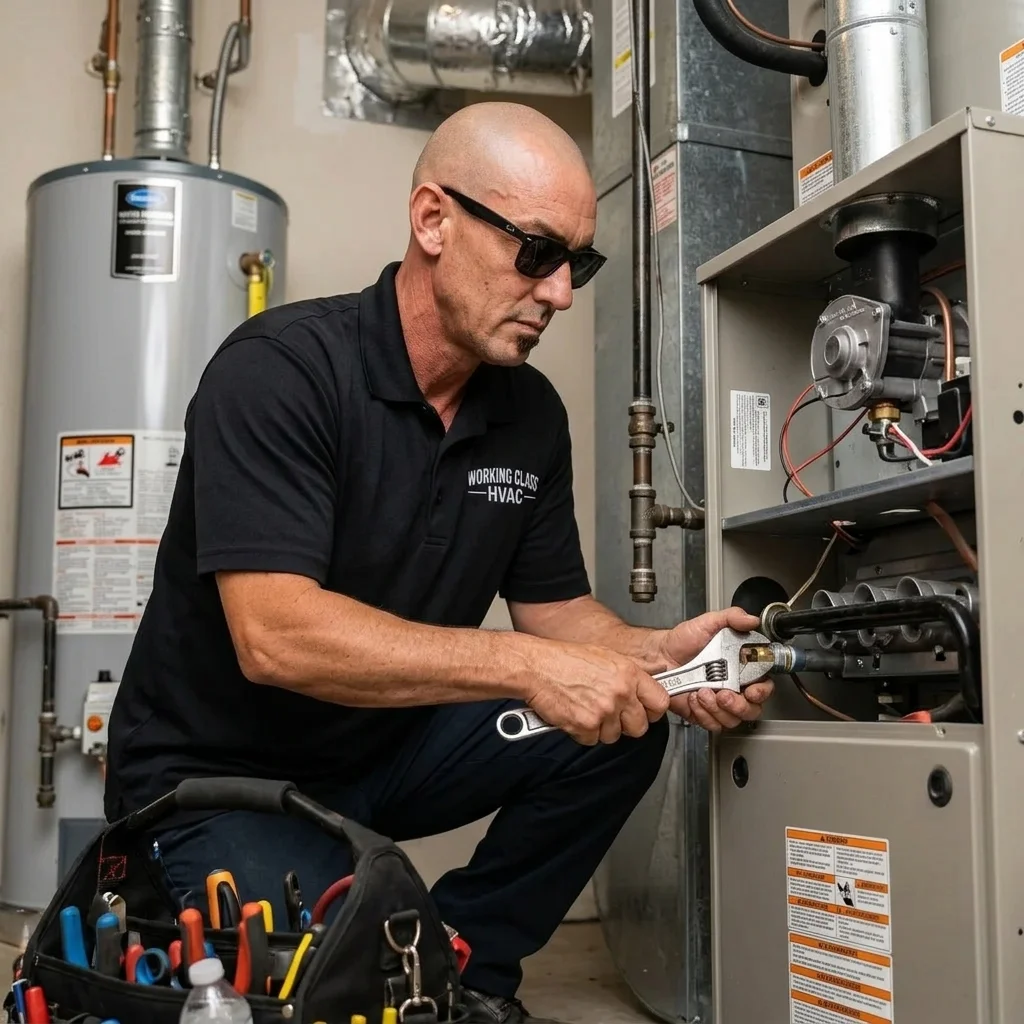
Lancaster Furnace Pressure Switch Lockout: Diagnostics, Costs, and C-20 Actions
| Common Issue | Technical Symptom | Lancaster/AV Cost or Metric | C-20 Field Action |
|---|---|---|---|
| Blocked Venting (Ice, Debris, Animal Nest) | Inducer runs, but pressure switch remains open; static pressure < -0.5" WC | Diagnostic: $129-$189 | Clear obstruction, inspect vent integrity, verify proper draft via manometer. |
| Defective Pressure Switch | Switch fails to close despite correct static pressure; often stuck open | Replacement: $385-$550 | Test switch continuity (should close at specified WC), replace with OEM-spec part, verify wiring. |
| Inducer Motor Malfunction | Motor hums or fails to spin, drawing high/low amps; no static pressure generated | Replacement: $680-$1200 | Measure motor capacitor MFD (e.g., 5-7.5 MFD), check winding resistance, verify 0.8-1.2A draw. |
| Condensate Drain Blockage (High-Eff.) | Water accumulation in trap/hose impedes pressure sensor; gurgling | Cleaning/Clearing: $129-$280 | Clear condensate trap, ensure proper slope, flush drain lines, verify no water in pressure tubes. |
| Flue Pipe Sag/Water Accumulation | Water pooling in vent pipe creates restriction; freezing risk in AV | Repair: $250-$450 | Re-pitch vent pipe to ensure proper drainage, inspect for corrosion, insulate exposed sections in attic. |
| Control Board Anomaly | Erratic pressure switch error codes (e.g., 3 blinks), no consistent logic | Replacement: $450-$800 | Verify all sensor inputs, check low-voltage wiring, confirm stable 24V power, replace if logic fails. |
Comprehensive Diagnostics for Pressure Switch Lockouts in Lancaster
When a furnace in Lancaster cycles on then immediately shuts off, displaying an error code often associated with the pressure switch (e.g., three blinks on a Lennox or Carrier board), a systematic diagnostic approach is essential. As a C-20 Master HVAC Contractor, my team at Working Class HVAC begins with a thorough visual inspection. We check the entire venting system from the furnace collar to the exterior termination for any visible obstructions, blockages, or disconnections. We also observe the inducer motor's operation: Does it spin up? Does it sound strained? Is there any gurgling indicating condensate issues in high-efficiency units?
The next critical step involves precise measurement using specialized tools. A digital manometer is indispensable for verifying the actual static pressure being generated by the inducer motor, ensuring it falls within the manufacturer's specified range (typically -0.5 to -1.5 inches WC). We use a multimeter to test for continuity across the pressure switch terminals, confirming it closes when the correct vacuum is present. Additionally, an amp clamp measures the inducer motor's current draw (usually 0.8-1.2 amps) to assess its health, and a capacitor tester checks the motor's run capacitor (e.g., 5-7.5 microfarads, ±6% tolerance) – a common failure point that mimics inducer issues.
Tracing the fault systematically allows for accurate and efficient repairs. We methodically rule out common issues: first, vent blockages (ice, debris, animal nests); second, a faulty pressure switch itself (often failing due to age or internal diaphragm issues); third, an ailing inducer motor or capacitor; and fourth, condensate drainage problems in high-efficiency furnaces where water accumulation can block the pressure port. Only after confirming these components are functioning correctly do we then consider more complex issues like a control board malfunction or a compromised heat exchanger, which could also lead to pressure switch anomalies.
- Measure static pressure at the pressure switch port using a manometer (target: -0.5 to -1.5" WC).
- Test pressure switch continuity with a multimeter; it should close when vacuum is applied.
- Verify inducer motor amp draw (0.8-1.2A) and capacitor MFD (within ±6% of rating).
Antelope Valley Climate, Code Compliance, and Common Failure Modes
The Antelope Valley, specifically CEC Climate Zone 14, presents a unique set of environmental factors that significantly influence furnace operation and can exacerbate pressure switch failures. Our extreme temperature swings, from scorching 110°F–116°F summer design temps to bone-chilling 20°F–28°F winter freeze nights, cause constant thermal expansion and contraction in venting materials. This relentless cycling can lead to cracks, loose joints, or sagging in the flue pipe, creating points where water can accumulate or where the inducer fan's vacuum seal is compromised, directly impacting the pressure switch's ability to prove safe operation.
Compliance with California Title 24 Part 6 mechanical code is not merely a bureaucratic formality; it's a blueprint for safe and efficient HVAC operation in our microclimate. This code dictates specific venting clearances—for instance, requiring vent terminals to be at least 12 inches from any operable window or fresh air intake—to prevent re-ingestion of exhaust gases. It also specifies materials and proper pitch for flue pipes to ensure effective condensate drainage and prevent water pooling, which can freeze and block the vent during our sub-freezing nights. As a C-20 contractor, Working Class HVAC ensures all repairs and installations meet or exceed these stringent local and state requirements.
Beyond code compliance, understanding common failure modes specific to the Antelope Valley is crucial. High-desert windstorms, often reaching 60 MPH from the Tehachapi or Soledad passes, frequently blow debris (leaves, tumbleweeds, plastic bags) into vent terminals or even dislodge vent caps entirely. During late November freezes, condensation inside the vent pipe can turn to ice, forming a critical blockage. Furthermore, the high-desert's alkali dust can accumulate in pressure sensing tubes or inside the pressure switch itself, impairing its function. Animal nesting, particularly from birds or rodents seeking warmth, is also a surprisingly common cause of vent obstructions, leading to inevitable pressure switch lockouts.
Flat-Rate Pricing, Repair-vs-Replace Decisions, and Value in Lancaster
At Working Class HVAC, headquartered right here at 2232 West Avenue L, Lancaster, CA 93536, we believe in upfront, transparent flat-rate pricing for all our services. For a furnace pressure switch lockout, our diagnostic fee typically ranges from $129 to $189, which is then applied to any necessary repairs. Common solutions include clearing a blocked vent ($129-$220), replacing a faulty pressure switch ($385-$550), or installing a new inducer motor ($680-$1200). These prices reflect the specialized tools, expertise, and genuine OEM-equivalent parts required to restore your system safely and efficiently, ensuring there are no hidden costs or surprises.
When facing a significant repair like an inducer motor replacement or repeated pressure switch failures, the 'repair versus replace' decision becomes critical. As your Master HVAC Contractor, I'll provide an honest assessment. Consider your furnace's age: units over 15 years old, especially those with an AFUE (Annual Fuel Utilization Efficiency) below 80%, are often candidates for replacement. The cost of a major repair, combined with the decreased efficiency and looming obsolescence, might outweigh the investment in an older system. Modern furnaces boast AFUE ratings of 95% or higher, offering substantial long-term savings on SoCalGas bills and qualifying for potential rebates.
Investing in a quality repair from a C-20 licensed contractor like Working Class HVAC provides immediate and long-term value. Our repairs are backed by a robust 2-year parts and labor warranty, giving you peace of mind. If your system is nearing the end of its life, we can discuss high-efficiency upgrade options that meet current SEER2/HSPF2/AFUE standards, providing superior comfort, lower operating costs, and enhanced reliability tailored to Lancaster's climate. We help you weigh the financial impact, energy savings, and expected lifespan to make the most informed decision for your home and budget.
- Furnace age: Over 15 years often warrants replacement consideration.
- AFUE rating: Older units < 80% are inefficient; new units are 95%+ AFUE.
- Frequency of breakdowns: Repeated issues suggest systemic problems beyond simple repairs.
Preventative Maintenance & When to Call 24/7 C-20 Dispatch
While some pressure switch lockouts are unavoidable due to extreme weather, proactive homeowner maintenance can significantly reduce their frequency. Regularly inspect your furnace's air filter and replace it every 1-3 months, especially during peak heating season or if you have pets. Periodically, visually check the exterior vent terminals for any obstructions – ice buildup after a freeze, leaves, or even spiderwebs. Ensure the area around the furnace is clear of clutter to maintain adequate combustion air. However, remember that safety is paramount: never attempt to bypass a pressure switch or perform complex internal diagnostics yourself, as this can create dangerous carbon monoxide hazards.
Professional annual preventative maintenance by a C-20 Master HVAC Contractor is the most effective defense against unexpected furnace breakdowns, including pressure switch issues. During a tune-up, Working Class HVAC performs critical checks: we conduct a combustion analysis to ensure optimal CO PPM levels (ideally < 9 PPM, never 0), verify proper gas pressure, inspect the heat exchanger for cracks, clean and lubricate the inducer motor, and test capacitors for proper microfarad (MFD) output. This comprehensive service ensures your furnace operates at peak efficiency, prolongs its lifespan, and crucially, identifies potential safety hazards before they become emergencies.
Knowing when to call Working Class HVAC's 24/7 dispatch at (661) 494-8075 is crucial. If your furnace is consistently locking out, making unusual noises, emitting strange odors, or if your carbon monoxide detector activates (evacuate immediately and call 911!), do not hesitate. For any persistent heating issues during Lancaster's freezing nights, or if you're uncertain about a furnace's safe operation, our team of EPA Section 608 Universal certified technicians is ready. As CSLB #1024283, we provide expert, emergency service to diagnose and resolve your furnace problems swiftly and safely, protecting your family and your investment.
- Persistent furnace lockouts or repetitive error codes.
- Any unusual noises (e.g., grinding, squealing) or smells from the furnace.
- Activation of your carbon monoxide detector (evacuate immediately and call 911, then us).
- No heat condition during freezing 28°F-34°F nights in Lancaster.
Frequently Asked Questions: Lancaster Furnace Pressure Switch Lockout Diagnostics & Repair
Why does my gas furnace in Lancaster click on then immediately shut off when it's freezing outside, showing a pressure switch error?
In Lancaster's 28°F–34°F freezes, this indicates a pressure switch lockout. High-desert winds, ice, or debris block the furnace's exhaust/intake vent, preventing the inducer motor from establishing the required negative static pressure (-0.5 to -1.5 inches WC). The safety switch opens, shutting down the furnace to prevent dangerous carbon monoxide buildup. Working Class HVAC diagnoses this for $129-$189, ensuring Title 24 Part 6 compliance.
What is a furnace pressure switch and why is it so important for safety in the Antelope Valley?
The pressure switch is a crucial safety device ensuring proper furnace venting before ignition. It monitors the negative static pressure created by the inducer fan, proving that combustion byproducts will safely exit the home. In the Antelope Valley, with its strong winds and freezing nights, this prevents hazardous carbon monoxide (CO) accumulation from blocked vents, safeguarding your family according to California Title 24 Part 6 standards.
Can I safely clear a blocked furnace vent myself in Lancaster, especially if it's due to ice?
While a homeowner can visually inspect and gently clear obvious ice or debris from external vent terminals, extreme caution is advised. Never force anything into the vent pipe, as you could damage the internal flue or inducer motor, leading to costly repairs ($250-$450) or unsafe operation. If the blockage persists or is internal, call Working Class HVAC (CSLB #1024283) for professional, safe clearing and system verification.
What diagnostic measurements does a C-20 HVAC contractor take to troubleshoot a pressure switch issue?
A C-20 contractor like Matt Gore utilizes a manometer to precisely measure static pressure (target -0.5 to -1.5 inches WC), a multimeter for continuity and 24VAC control voltage, and an amp clamp to verify inducer motor draw (0.8-1.2A). We also check the inducer capacitor's microfarad (MFD) rating and conduct a full visual inspection of the venting system and condensate drain (for high-efficiency units) to pinpoint the root cause.
What are the common flat-rate costs for repairing a furnace pressure switch lockout in Lancaster?
For a typical pressure switch lockout in Lancaster, a diagnostic fee runs $129-$189. If the issue is a blocked vent, clearing costs $129-$220. A faulty pressure switch replacement is generally $385-$550. If the inducer motor is failing, replacement can be $680-$1200. These flat-rate prices from Working Class HVAC (CSLB #1024283) ensure transparent, upfront costs with no surprises.
How does Lancaster's high-desert elevation and extreme weather impact furnace venting?
Lancaster's 2,359–4,000 ft elevation means thinner air, slightly affecting combustion and requiring proper furnace calibration. More significantly, the high-desert's 60 MPH Tehachapi/Soledad pass alkali windstorms and 20°F–28°F winter nights stress venting. Strong winds can create back pressure or dislodge vent components, while freezing temperatures lead to ice buildup, both triggering the pressure switch and demanding robust, Title 24-compliant venting.